
Squashing Noncompetes: The FTC Takes Aim at Pest Control
The Federal Trade Commission (“FTC”) fired a significant shot across the bow this week for employers relying on noncompete agreements or provisions within employment agreements.
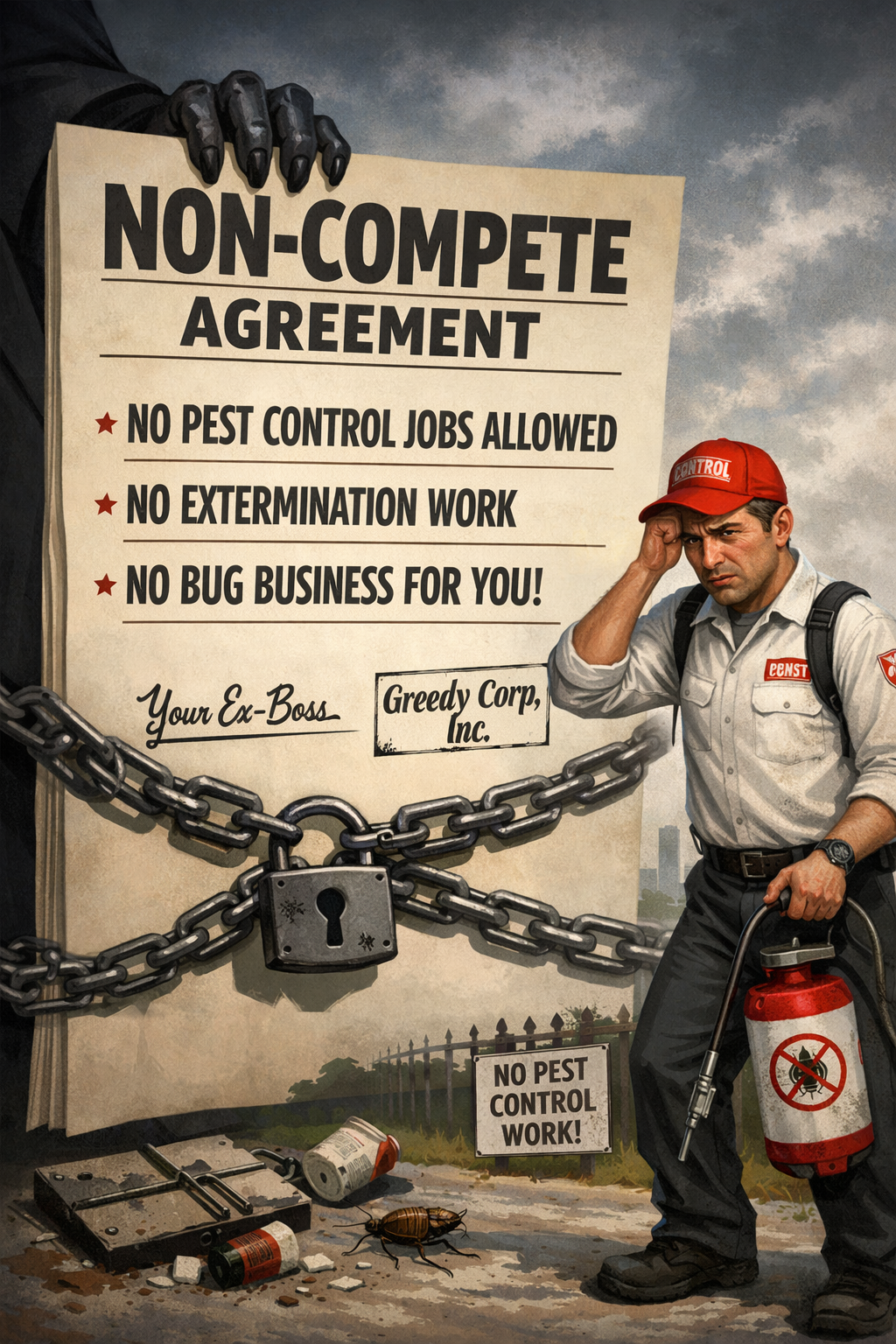
On April 15, 2026, the agency ordered one of the nation's largest pest-control companies to stop enforcing noncompete agreements against more than 18,000 employees nationwide. The FTC also sent warning letters to 13 other pest control companies, putting the entire industry on notice that the agency views broad noncompete provisions as unfair methods of competition. (Links to the complaint and Order in the comments.)
It is worth noting that two years ago, almost to the day, the FTC issued a decision banning noncompetes in their entirety, which I wrote about here.
This action marks the latest chapter in the FTC's ongoing campaign to dismantle noncompete practices that, in the agency's view, suppress wages, stifle small business formation, and trap workers in jobs they would otherwise leave.
Employers in every industry should pay close attention because the lessons from this case extend well beyond pest control.
What the Company Did
The company (a parent company of other well-known pest control subsidiaries) operated more than 700 locations across the United States and employed over 18,000 workers. It maintained a longstanding policy requiring virtually all newly hired employees, without regard to their position or job duties, to sign noncompete agreements. Those agreements typically prohibited workers from working anywhere in the pest control industry for two years after leaving the company, within a 75-mile radius of the company location where they worked.
The FTC's complaint painted a bleak picture. The company applied these noncompetes broadly, covering pest control techs, customer service representatives, and other relatively low-wage workers. Allegedly, the employees could not negotiate the terms, received no extra compensation for signing, and often had little or no time to review or understand the terms of the agreement. Some employees believed they would lose their jobs if they refused to sign.
The company did not just file these agreements away and forget about them. Rather, it issued hundreds of cease-and-desist letters to former employees citing alleged breaches of the noncompetes. The company also filed multiple lawsuits against former employees who dared to compete. The FTC noted (scoldingly, is that a word?) that many of these workers simply could not match the resources the company devoted to lawyers and litigation, and they had to give in.
Why the FTC Called It Unfair
The FTC alleged that the company's noncompetes harmed workers and competition in several concrete ways. First, they denied employees access to better job opportunities and restricted their mobility. Next, they likely caused lower wages, reduced benefits, less favorable working conditions, and personal hardship. Further, the provisions also likely suppressed competition by impeding the entry and expansion of the company's competitors in the pest control industry.
Perhaps most notably, the FTC alleged that former employees who tried to start their own pest control businesses had to severely limit or restrict those businesses when the company threatened enforcement or filed suit. The agency concluded that the noncompetes significantly diminished the timeliness and likelihood of competitive entry into the market.
The FTC rejected the idea that the noncompetes were necessary to protect the company’s legitimate business interests. The agency noted that the company published its pest control methods on its website and in YouTube videos, undermining any claim that noncompetes protected confidential information. The FTC observed that narrowly tailored nonsolicitation agreements could adequately protect customer relationships and confidential customer lists.
What the Order Requires
The consent order imposes sweeping obligations on the company. It must immediately stop entering, enforcing, or threatening to enforce noncompete agreements against any “Covered Employee,” a term defined broadly to include current employees, former employees who left within the prior two years, prospective hires, and even third party contractors. The only carve-out is for directors, officers, and senior leaders eligible for equity compensation. Technicians are free to compete.
Other salient aspects of the Order: (i) within 60 days, the company must send a personalized letter to every affected employee declaring their noncompete null and void and informing them they are free to compete; (ii) new hires must receive a conspicuous notice that their employment will not be subject to a noncompete; and (iii) the company must file compliance reports for 10 years, which include sworn declarations that noncompetes have been rescinded.
It bears emphasizing that the company settled this matter without admitting that it violated the law or that the FTC's factual allegations are true. But the practical impact on this employer, and the signal to other employers, is unmistakable.
Employer Takeaways
🎯 First, blanket noncompete policies are a litigation and regulatory target. The company applied the same noncompete to nearly every employee, from senior managers to entry level technicians. The FTC viewed that one-size-fits-all approach as a hallmark of unfairness. Employers who still maintain broad noncompete policies should audit them. If the same restriction applies to a vice president and a frontline technician earning modest wages, the policy is likely overdue for revisions.
⚖️ Second, enforcement activity matters as much as the agreement itself. The FTC did not just look at what the noncompetes said on paper. It also highlighted the company's aggressive enforcement, i.e., hundreds of cease-and-desist letters, multiple lawsuits, and the power imbalance between a national corporation and individual workers who could not afford to fight back. Employers should consider if their enforcement practices create the kind of chilling effect that draws regulatory scrutiny, even where the underlying agreements might otherwise pass legal muster.
🔧 Third, consider less restrictive alternatives. The FTC made clear that legitimate business interests like protecting confidential information, preserving customer relationships, and safeguarding training investments, can often be addressed through narrowly tailored nonsolicitation agreements, confidentiality agreements, and trade secret protections. These tools impose less burden on workers (as long as they are not noncompetes in disguise!) and are far less likely to attract regulatory or judicial challenge.
🗺️ Fourth, remember state law. The FTC’s action adds a federal layer to an already complex patchwork of state restrictions on noncompetes. A growing number of states—including California, Minnesota, Oklahoma, Colorado, and soon Virginia, among others—have enacted outright bans or significant limitations on noncompete agreements, particularly for lower wage workers. Multi-state employers need to ensure their restrictive covenants comply with federal enforcement priorities AND state-specific requirements in each jurisdiction where they have employees. A noncompete that might survive scrutiny in one state could be void or unenforceable in another. It’s not a one-size-fits-all.
👁️ Fifth, the FTC is watching—and not just one company. The warning letters to 13 additional pest-control companies signal that the FTC views this as an industry-wide problem and intends to broaden its enforcement activity. And while this case arose in pest control, the FTC's legal theory—that broad noncompetes imposed on lower-wage workers without negotiation or consideration constitute unfair methods of competition—applies with equal force to restaurants, home services, retail, healthcare staffing, and many other industries where noncompetes remain common.
Employers across the economy should treat this action as a call to review their own agreements before the FTC does it for them.